
Vonnegut's first rule is the only rule of writing that matters
All writers want the same thing but the internet makes it easy to forget
This morning I spent an hour scrolling Notes. Not posting or commenting, not liking. Just looking. Scroll long enough, you start to notice patterns.
For example? A lot of people have bought into engagement schemes.
You know those, right? “Hit like and drop a link” and boy, they do. By the hundreds, or thousands. Here’s another one. “I want to read the little people” and those get tons of hearts, too. On the surface, I’m sure they think it’s working because of the wild amount of engagement they get. So they keep doing it for the little burst.
I see those and shake my head. Didn’t we learn how useless engagement schemes were back on Facebook? I guess some people don’t learn. Man, I don’t know.
And birds. Why do we love birds so much? Cripes, I should be taking pics of the birds in my yard. Blue jays. Three generations of them now. They’re hilarious and scream at my office window when I don’t notice that the bowl of treats is empty.
And quotes, and politics, and pithy statements.
Like this one.
Someone said maybe the reason new writers are struggling is that they’re trying to write for an audience. Just write for yourself!!! That one had a stunning number of hearts. I guess all the people writing for themselves felt seen and heard.
Vindicated, maybe even. Yes, they’re doing the right thing!
I kept scrolling.
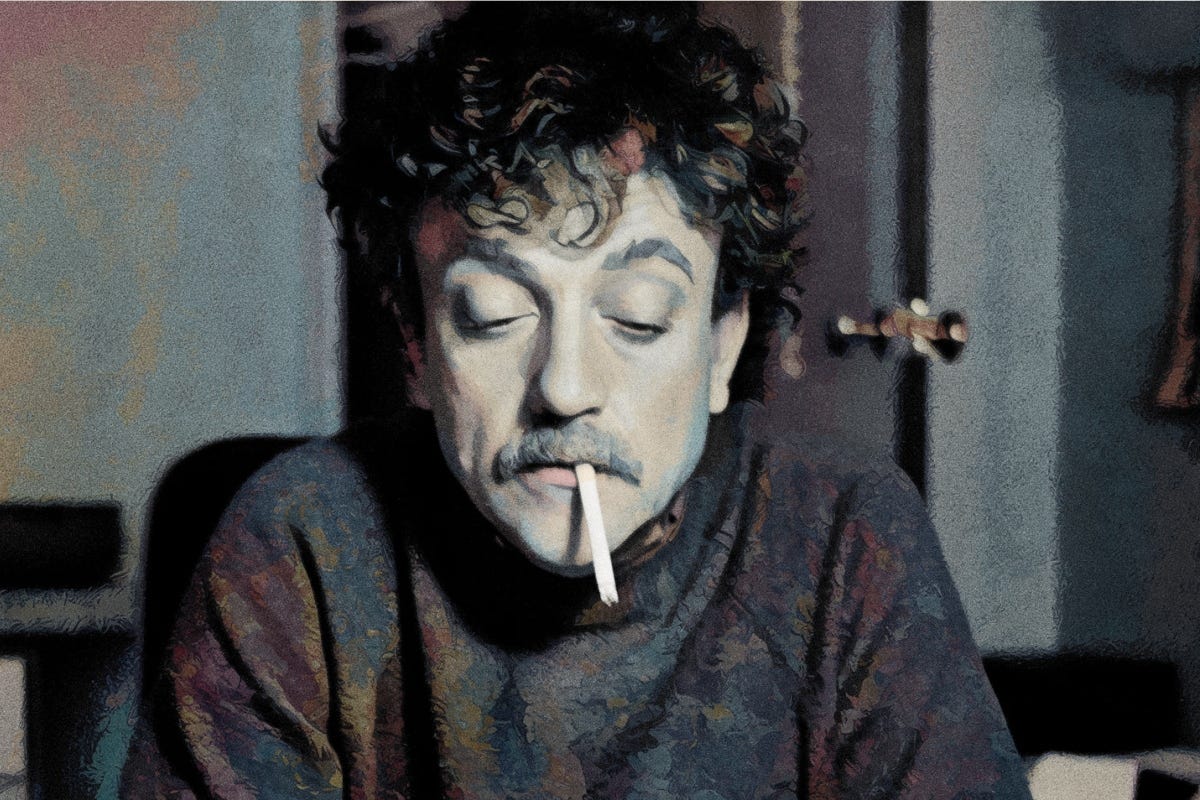
And oh, the irony. Just a few posts under it, someone shared Kurt Vonnegut’s 8 rules for creative writers. And they’re pretty good rules as far as writing goes, but the truth is only the first rule matters. Here’s Vonnegut’s first rule;
Use the time of a total stranger in such a way that he or she will not feel the time was wasted. — Vonnegut’s 8 rules for creative writing
He actually said that himself, at the end of the piece.
The greatest American short story writer of my generation was Flannery O'Connor (1925-1964). She broke practically every one of my rules but the first. Great writers tend to do that. — Vonnegut’s 8 rules for creative writing
Writers who found some measure of success have been giving advice for all of time. Hemingway wrote his advice in A Moveable Feast. Ray Bradbury, Annie Dillard, Dean Koontz, Anne Lamott, Stephen King — they all have books on writing.
Every time some writer gives advice, another writer needs to prove it wrong.
Anton Chekov said don’t put a loaded rifle on the stage if no one is going to fire it, which was basically telling writers to eliminate unnecessary detail, which is the same as kill your darlings, which is the same as Zinsser saying fluff is the curse of writing.
Which is why Hemingway wrote a short story called Fifty Grand and filled it with characters and things that were totally irrelevant to the story and only appeared once, because it was a big old middle finger to writing rules in general and Chekov’s Gun in particular. And he got away with it because he didn’t break the only rule that matters.
Which is — Vonnegut’s first rule. Use the time of a total stranger in such a way that he or she will not feel the time was wasted.
It’s not just for fiction or novels. It applies to everything. Essays, stories, poetry. We’ve all read something and thought wow, that’s 7 minutes of my life I’ll never get back.
The hard part is knowing what that means.
I have books of poetry I read over and over again. When I’m feeling lost. When I have no words. When I’m struggling to write. I will pick up those books and flip through them until I find something that resonates and feeds me.
In a 2022 study, the National Endowment for the Arts said 90.8% of American adults do not read poetry. Nada. None. Don’t like it.
Does that mean poetry is a waste of time?
Not to the 31.3 million Americans who read it.
I hear poets lament that you can’t make a living on poetry, no one reads poetry anymore (blah, blah, blah) and yet over 30 million Americans read and enjoy poetry. The English-speaking population of the world is around is around 1.5 billion people and if a mere 10% of them love poetry, that’s 150 million people.
I do have a point. lol
All writers want the same thing. We want to be seen. Name recognition.
Doesn’t matter what else we want. Some want money, some don’t care. Some want a contract with one of the big five publishing houses. Some don’t care. Some want to be at the top of their leaderboard or wherever they write. Some don’t care. Some of us are competitive, some are not. But we all want to be seen. Heard.
But we all want our readers to recognize us.
Oh look, Richard has a new poem.
Oh look, Jill made more art.
Oh look, Liz has a new book.
Anais Nin once said “I want to be loved—or at least seen.”
I think that taps into something really primal.
We all want to be seen. Heard. Validated.
The irony is the internet makes it easy to forget what *we* really want in favor of what the internet wants from us, which is for us to buy into the attention economy and mass consumption and endless scrolling.
So we fall for engagement schemes and our rage buttons get pushed and we restack our own work over and over as if that’s going to help us find readers. And when it doesn’t work, we think they just don’t like our work. We think it’s us.
At least, that’s what I thought. For too long. For four years when I was writing and writing, getting no traction. Four years, didn’t even get 2000 readers and I was dead sure it was me. It wasn’t. I was just letting the internet drive my bus. You know?
So I’m curious to know if you’d be interested in working out a step by step strategy. Not to get you seen on notes. Not to go “viral” whatever that means. But to help you grow as a writer and find your people. I’m thinking out loud here, but in this world of AI everywhere, feels like helping other writers in some kind of concrete way is maybe a thing I could get on board with. Wondering what you think.

Reading your posts is like having a conversation with your smart-assed bestie- educational while being entertaining. Amusing at the same time challenging. Thought provoking, while at other times protective of our creative art. You are a perfect student of Vonnegut💞
Oh, Linda, I enjoyed this. lol
I’ve always held the idea that “we write for ourselves” a little suss. I get it, the aphorism is meant to represent not going for the low hanging fruit. Authenticity and all that. But I think it’s a little dishonest to say we don’t care if we have an audience.
I am, however, often fond of a pithy quote or two. lol
I’d love if there was some way to develop a community. I fear the very tendency people don’t comment and click like very much doesn’t bode well , but I’d be interested.